

Rialengo protects his musical creative process with Enotar.io
Costa Rican musician and producer Rialengo explains how registering every stage of his work allowed him to participate in an international festival and safeguard his creative process.
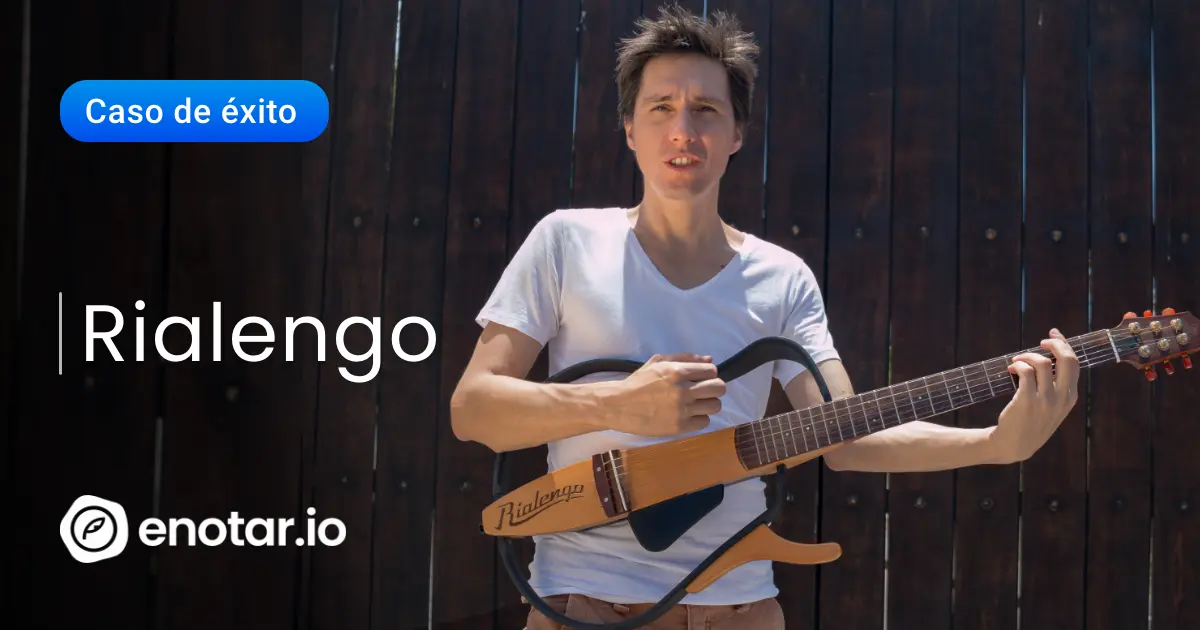

Costa Rican tropical music continues to expand into new stages, and with this growth comes the need for artists to have reliable tools to protect their work. In an interview conducted by Enotar.io, musician, composer, and producer Rialengo —known for his work in tropical and cumbia genres— shared how digital protection became essential while preparing for an international festival.
It was in this context that he discovered Enotar.io, a platform that allowed him to register his music quickly, efficiently, and with verifiable documentation anywhere in the world.
Fast registration for an international opportunity
“I found Enotario because I needed to participate in an international festival. Searching and searching, I found this platform that gave me the possibility of fast, agile, and verifiable registration anywhere in the world.”
That first encounter confirmed that digital registration solved a critical problem: documenting authorship under tight deadlines when immediate evidence is required.
Protecting every step of the creative process
As a producer, Rialengo works with artists who arrive at his studio with new ideas, drafts, and compositions in progress. The need to protect these materials arises from the very first moment.
“One of the main questions from the people who come here is: ‘How do we protect what we’re creating?’. Enotario has been a basic tool to register every stage of the process.”
With digital records, he can document each stage in an organized way:
- Initial demo
- Production progress
- Partial recordings
- Final published version
Each registration generates a certificate with a date, timestamp, and cryptographic hash backed by blockchain, creating a verifiable timeline of the creative process.
Strong international support
This complete traceability becomes solid evidence in case of disputes or authorship concerns.
“Everything becomes conclusive proof in case anything happens internationally. And if there’s ever arbitration, the whole sequence is right there to review.”
For an artist involved in multiple collaborations and aiming for international stages, this protection is a fundamental legal foundation.
Conclusion
Rialengo’s testimony highlights the importance of documenting every step of the musical creative process, especially in environments where collaboration and improvisation are constant. His experience shows that registering demos, ideas, and progress not only protects authorship but also provides essential backing to move forward confidently toward international opportunities.
Acknowledgment
We thank Rialengo for sharing his perspective as both producer and creator, and for transparently demonstrating how digital protection benefits his own work as well as that of the artists he collaborates with. His experience brings tremendous value to the ongoing conversation about copyright within contemporary music.